
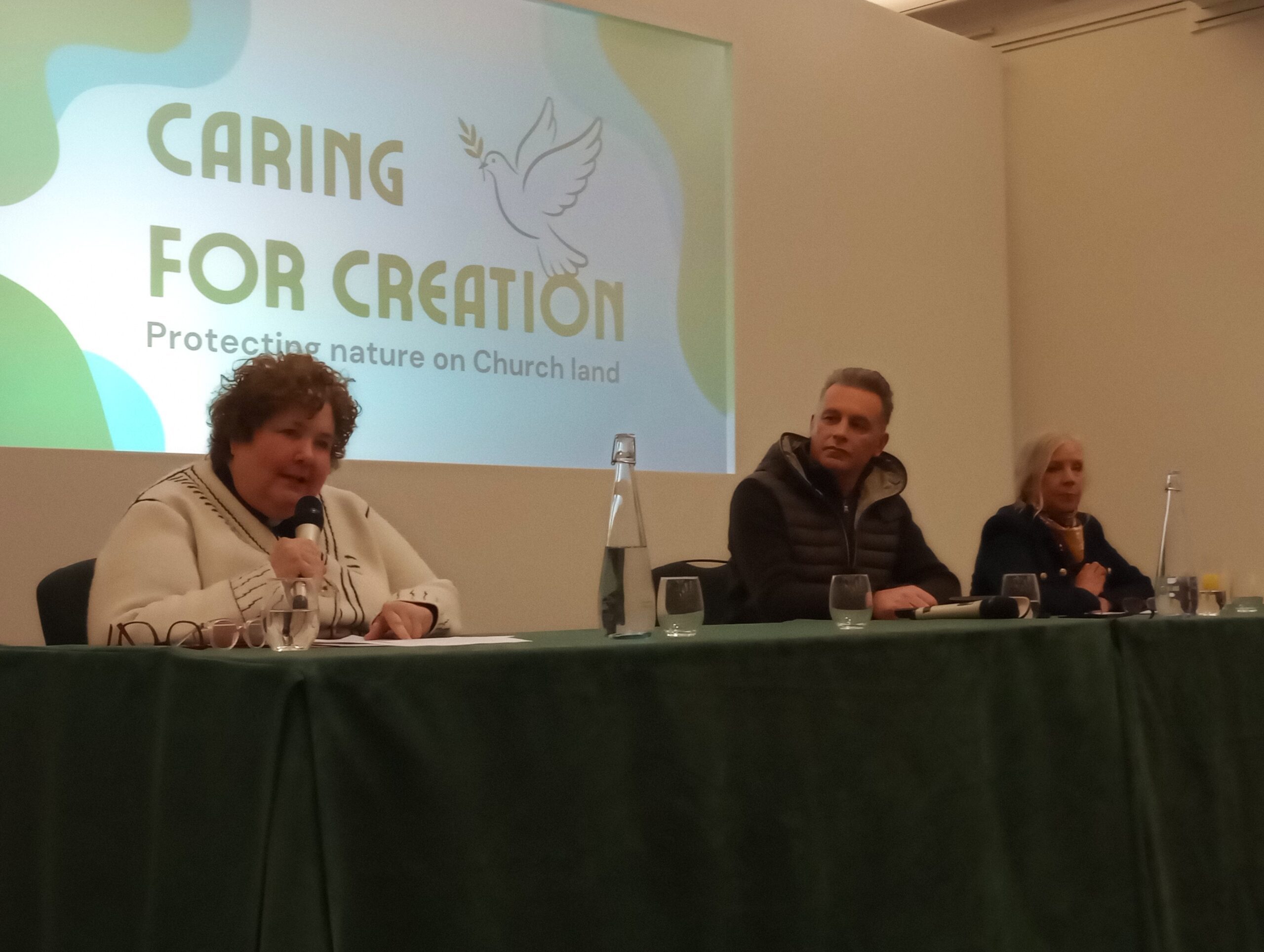
Operation Noah was pleased to attend February’s Church of England General Synod, particularly supporting the Caring for Creation fringe event organised by Revd Canon Val Plumb and featuring guest speakers Chris Packham and Deborah Meaden. This was a very positive evening which presented arguments for why the Church should be doing more to protect 30% of UK land for nature by 2030.
Chris Packham, well-known for BBC’s Springwatch and other environmental programmes, spoke powerfully about the loss of wildlife since his youth and the value of healthy ecosystems in sustaining all life including the food we need to eat. He talked about the potential difference that large landholders like the church can make, and stressed how patience, tolerance and kindness can instigate the transition we need for positive change.
Deborah Meaden, a popular investor from BBC’s Dragon’s Den, addressed the financial and business case for restoring nature, arguing that the Church can afford to do this while maintaining their fiduciary duties to fund the work of the Church. She pointed to the new profitability of the Knepp Estate who have led the way in rewilding, while also creating 70 new local jobs. She stressed how the Church Commissioners need to assess the potential of nature restoration on their land.
Revd Canon Val Plumb shared the spiritual imperative for the work, drawing on her experience as a rural dean and the inspiring work she has seen across dioceses and Eco Church groups. She argued that creation is crying out for liberation, and that the Church holds the gift and responsibility of leading the way. She drew attention to her Private Members’ Motion (detailed background here) which is seeking to bring this debate to the main General Synod meeting in July, and which is still open for signatures. You can send a message asking your local synod reps to support the motion through this action page – if it gains 100 signatures it will be considered for inclusion in the July agenda. As of 18 February, 84 synod members had signed to support it.
A debate on Sustainable Church Flowers had been met with some derision, and there was an attempt to avoid it entirely by a proposal to move on to the next business. Thankfully this was seen off, and a thoughtful debate ensued, bringing together the importance of worship which celebrates and does not harm God’s creation with the value of hearing all voices, from the local parish and from under-appreciated teams of mostly women.
The proposer, the Bishop of Dudley, clarified that the motion did not ban anything or force churches to do anything, but rather it was seeking to encourage churches to source flowers locally and transition away from floral foam. There were inspiring contributions about incorporating meaningful and seasonal, local greenery and the benefits of avoiding microplastics and airmiles.
There were practical suggestions including some techniques used before floral foam was introduced in the 1950s, and recognition of the wisdom from older flower arrangers as well as the passion of younger people who prioritise sustainable approaches. The motion passed with overwhelming support and the supporting video can be viewed within the debate coverage on YouTube.
New liturgy relating to a proposed Festival of God the Creator was warmly welcomed after careful revisions by the committee. There were many thoughtful and moving contributions from Synod members on this topic alongside another proposal to commemorate the 21 Libyan martyrs. One addition had been the inclusion of an act of commitment to take action to protect creation.
Bishop Graham Usher, the lead Bishop for the Environment presented the report and the motion to ‘take note’ of the report was agreed by Synod. Some further minor revisions were suggested and the timeframe for introducing the Festival was not made clear although there may be a further opportunity in July’s Synod to finalise the festival before it could be marked in the autumn.