By Judith Russenberger, an environmentalist and theologian who lives in southwest London.
Having seen last year’s National Emergency Briefing (NEB) in person – a series of talks given by climate, energy and security experts at Methodist Central Hall in Westminster – I was keen that more people hear the messages it conveyed, both the sobering ones and positive ones.
My first reaction was to email the link to the recording of the NEB to as many people as I could contact. However, the recording, like the briefing, was well over two hours long and very intense.
When it was edited into episodes on YouTube – one for each speaker – I tried to interest my husband in the briefing, but even one episode at a time was too much.
I knew that an edited version was in the pipeline for widespread distribution, but the five-month wait seemed interminable in light of the urgency of the emergency. But wait I did, whilst in the meantime trying to encourage my local council, my diocese and my area bishop to agree to screen the film.
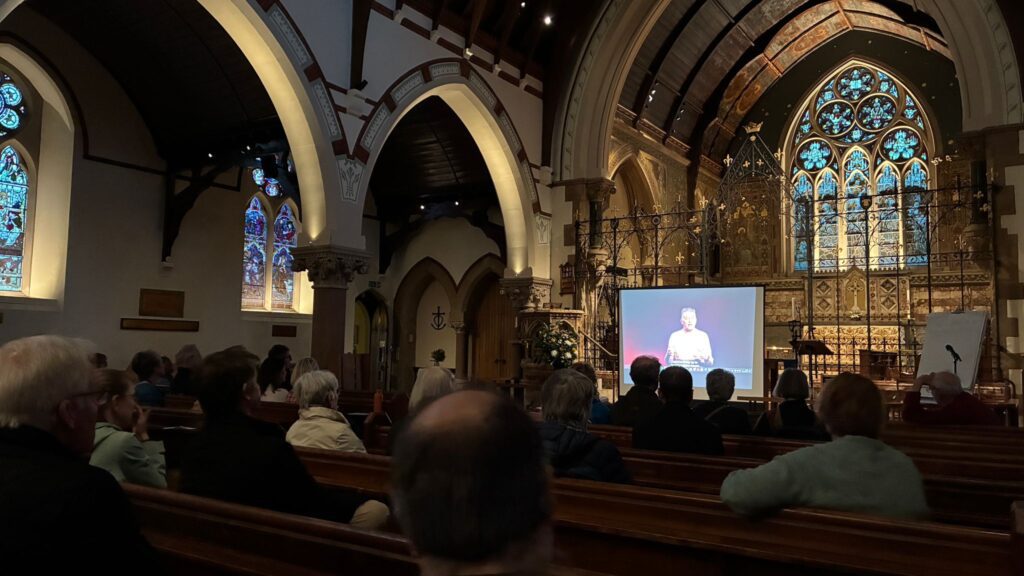
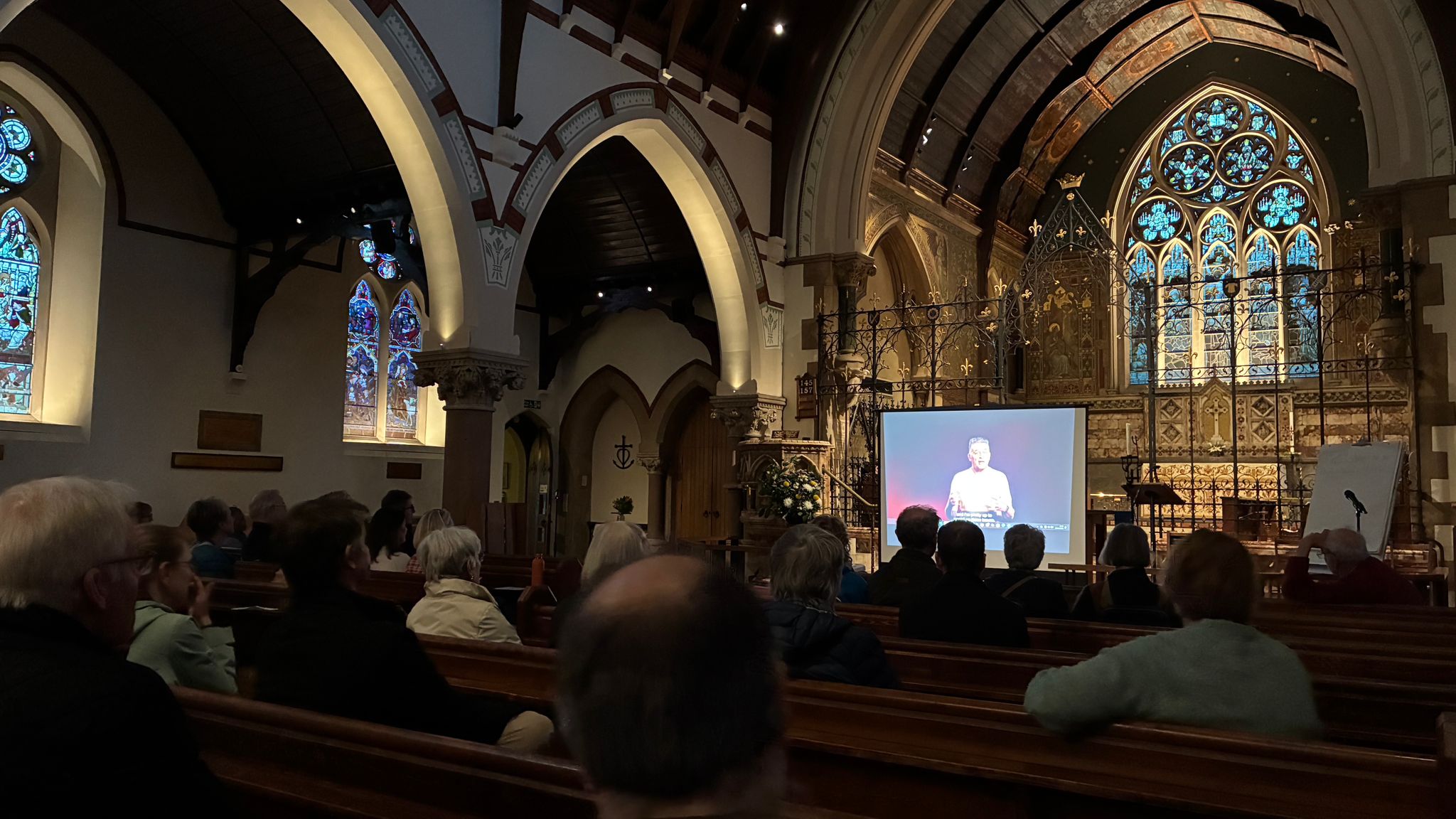
My feeling of urgency pushed me to work with my vicar to book an early date for our church in southwest London to screen the film – now known as the People’s Emergency Briefing.
I was able to use the church for free, and our vicar was happy to chair the event. With about a month in hand, I followed the advice of the screening pack and emailed invitations to my MP, bishop, local councillors, PCC, nearby schools, doctor’s surgery, local community groups, sports clubs, local environmental organisations, street WhatsApp groups, and local media websites.
Even though the screening would be free, I set up an eventbrite page, as I knew that asking people to book a ticket would give me a feel for the numbers that might turn up (always recognising that not all who booked a ticket would come, and not all who turned up would have booked).
My next task was to organise the post-film discussion. Here I felt that the structure provided by the PEB’s facilitation pack was too long, so I devised two short questions for the audience to discuss in small groups. I also asked an experienced friend to facilitate this part of the evening while I wrote each group’s answers on large flip charts.
I considered providing refreshments for the screening, but in the end, concluded that this was more than I could handle and would also lengthen what was already a long evening. The film was 50 minutes’ long and I was planning on allowing 30-40 minutes for the post-film discussion.
My hope was that those who attended the screening would be sufficiently motivated to take action individually or by joining an action group. I compiled a list of such groups which was then handed out to everyone who came. I also invited several local groups to have their information displayed on tables; this included the local Friends of the Earth group, our local XR group and a nature restoration group.
Over 50 people attended the screening – and not all the usual suspects, either – and the discussion was animated and diverse. While our MP didn’t attend, I sent a summary of constituents’ responses to the film. The bishop did come and was scheduled to facilitate a discussion of the film following a screening at the cathedral. A couple of people went away keen to organise screenings in their communities and I also learned our local Friends of the Earth and XR groups were hosting another screening of the film in a larger venue.
The People’s Emergency Briefing screening was definitely worth doing. It can be organised by just one person, but more people makes the load easier. Importantly, each screening has ongoing ripple effects.