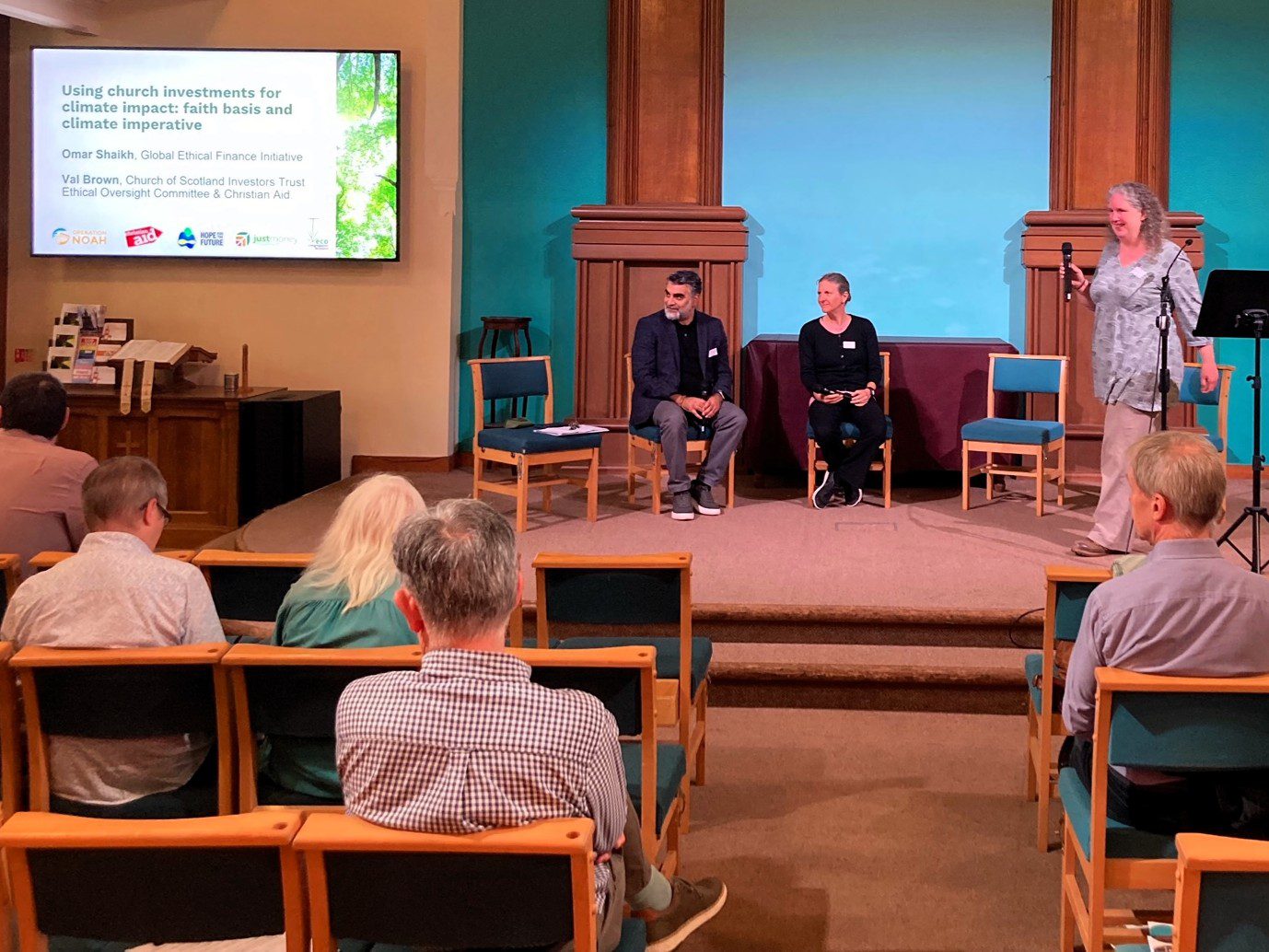
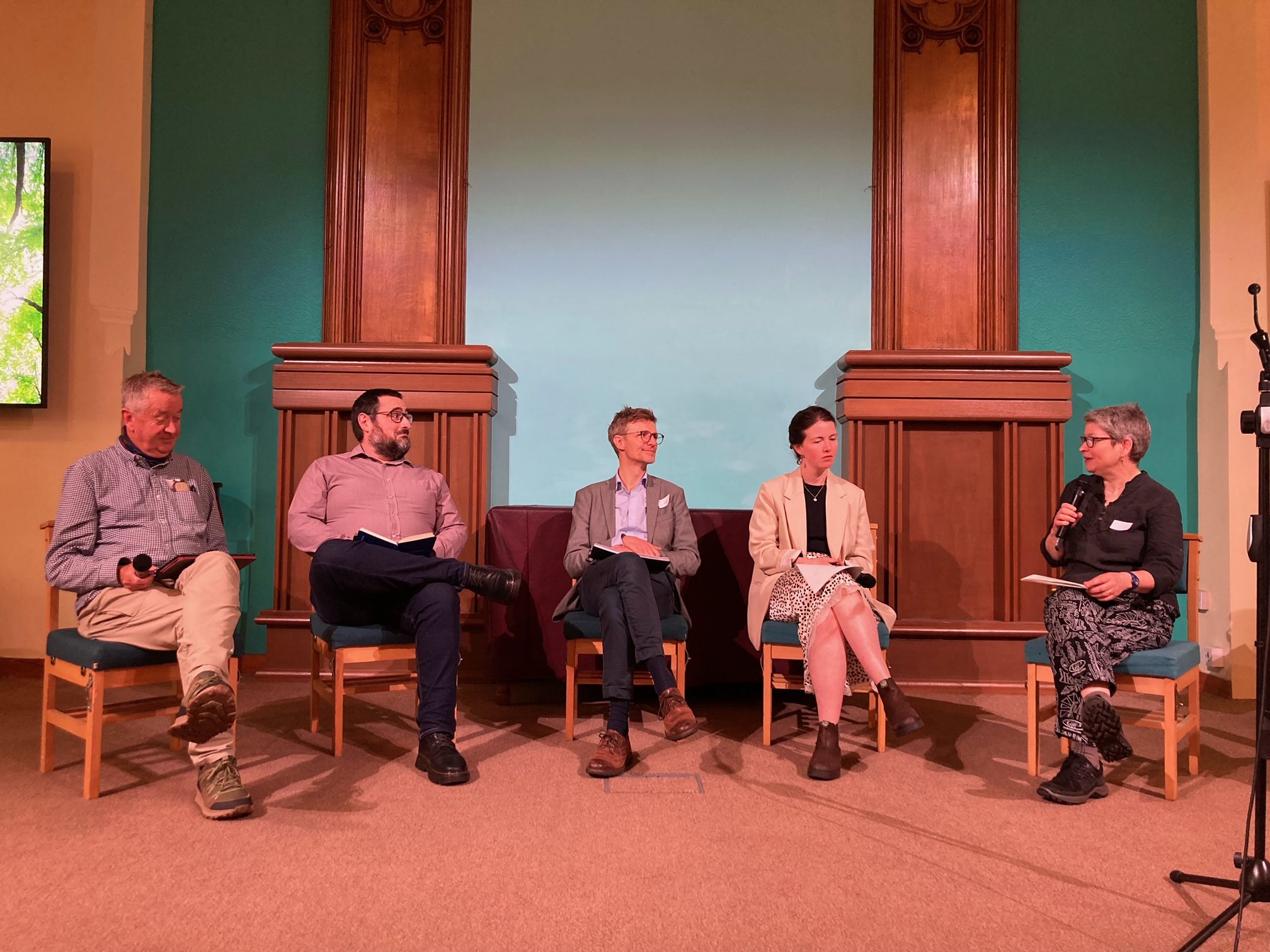
We were delighted to be in Augustine United Church, home of Christian Aid Scotland for this event where we partnered with Eco-Congregation Scotland, Hope for the Future, Just Money Movement and Christian Aid Scotland. The day was co-hosted by Operation Noah’s Sharon Hall and Jenny Adams, Chair of Eco-Congregation Scotland, and we had a wide variety of experienced and inspiring speakers who provided a great exploration of why and how churches should be investing in climate solutions.
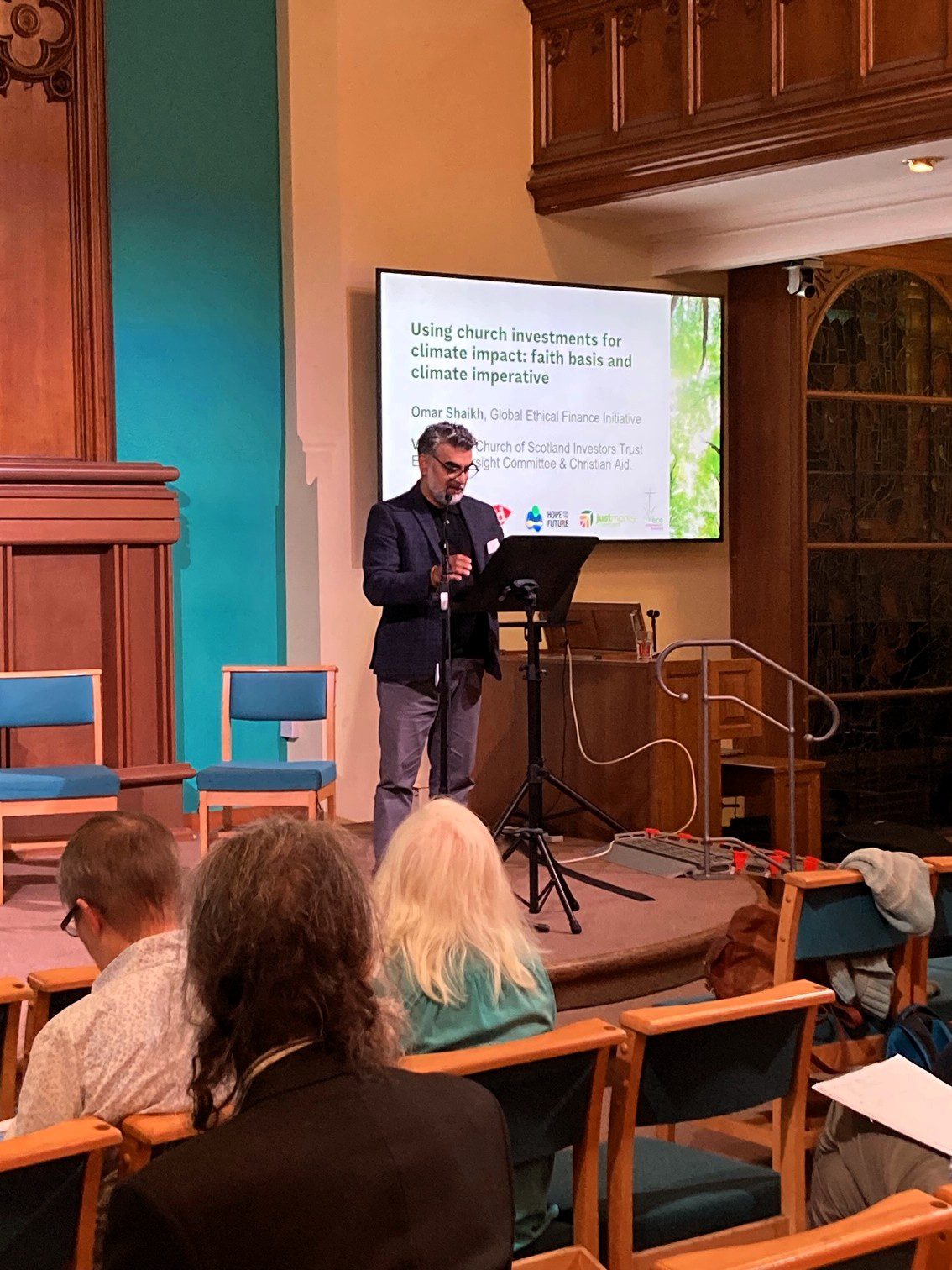
Omar Shaikh from Global Ethical Finance Initiative started with an emphatic presentation which stressed that faith organisations such as churches really need to ensure that what we do lines up with what we say we believe. For churches who believe care for creation is important, we must make sure that what we do with our money isn’t undermining the message we want to share. He drew on historical examples of churches who wouldn’t invest in apartheid South Africa. He made points about how investing in climate solutions can be good business sense, and not simply philanthropy.
Val Brown brought her experience as Chair of the Ethical Advisory Group for Church of Scotland Investors Trust and as Christian Aid’s Head of Scotland to make more links to supporting justice, and the importance of climate action for people in poverty around the world. She picked up a much repeated theme at the event of not letting the perfect be the enemy of the good, and talked about engaging with investments as well as choices to exclude fossil fuels and actively include climate solutions.
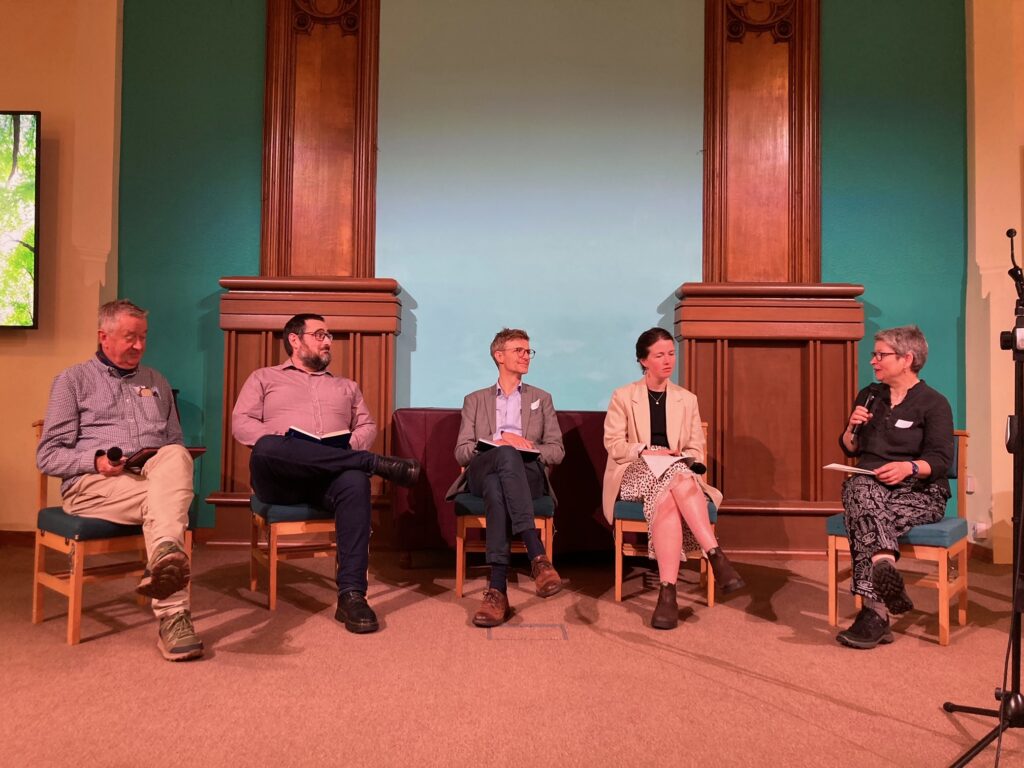
Jenny Adams then chaired a panel focusing on practical examples of opportunities for investment in climate solutions. First we heard from Fionnuala Shakespeare about the positives of impact investing and the example of Christian Aid’s recently launched Resilient Futures Fund. This fund which is currently open for philanthropic giving only allows supporters to invest in a range of climate solutions projects in sub-Saharan Africa. The money will subsequently be invested in additional projects, multiplying the amount of difference that can be made and offering an empowering alternative to simple donations. In the future this fund should be available on an investment model basis.
Robert Guest from Foresight Natural Capital introduced us to the world of investing in nature, drawing on examples from their estates in Scotland. Their approach combines sustainable forestry, peatland restoration and sustainable farm businesses and works with good consultation with local communities. He later gave us insight into the range of trees they are planting, not just working with forestry standards requiring minimum percentages of broadleaf trees and open ground but going way beyond this for better biodiversity.
Hamish Leese is Director of Environmental Engagement at the Methodist Church and he made links to some of the church values points made by Val and Omar in their keynote speeches. He outlined the investment approach by the Methodist Church, particularly by the Central Finance Board and was pleased to share how the CFB has recently signed up to the Green Investment Declaration. He also mentioned their current campaign targeting their bank, HSBC, and their investments in fossil fuels, including financing activities linked to environmental damage, the displacement of communities, water scarcity, and serious health impacts associated with the Cerrejón coal mine in Colombia.
Adrian Shaw is a trustee of Eco-Congregation Scotland but he talked primarily from his previous role as an investor and former board member of a community energy project with Awesome Energy Dalriada (named for the river Awe). He gave a good overview of the long process and some risks involved in this work but also highlighted how over £400,000 has been distributed to local community projects through their model. The panel then addressed issues of barriers to green investment and how these can be overcome, before answering questions from the floor.
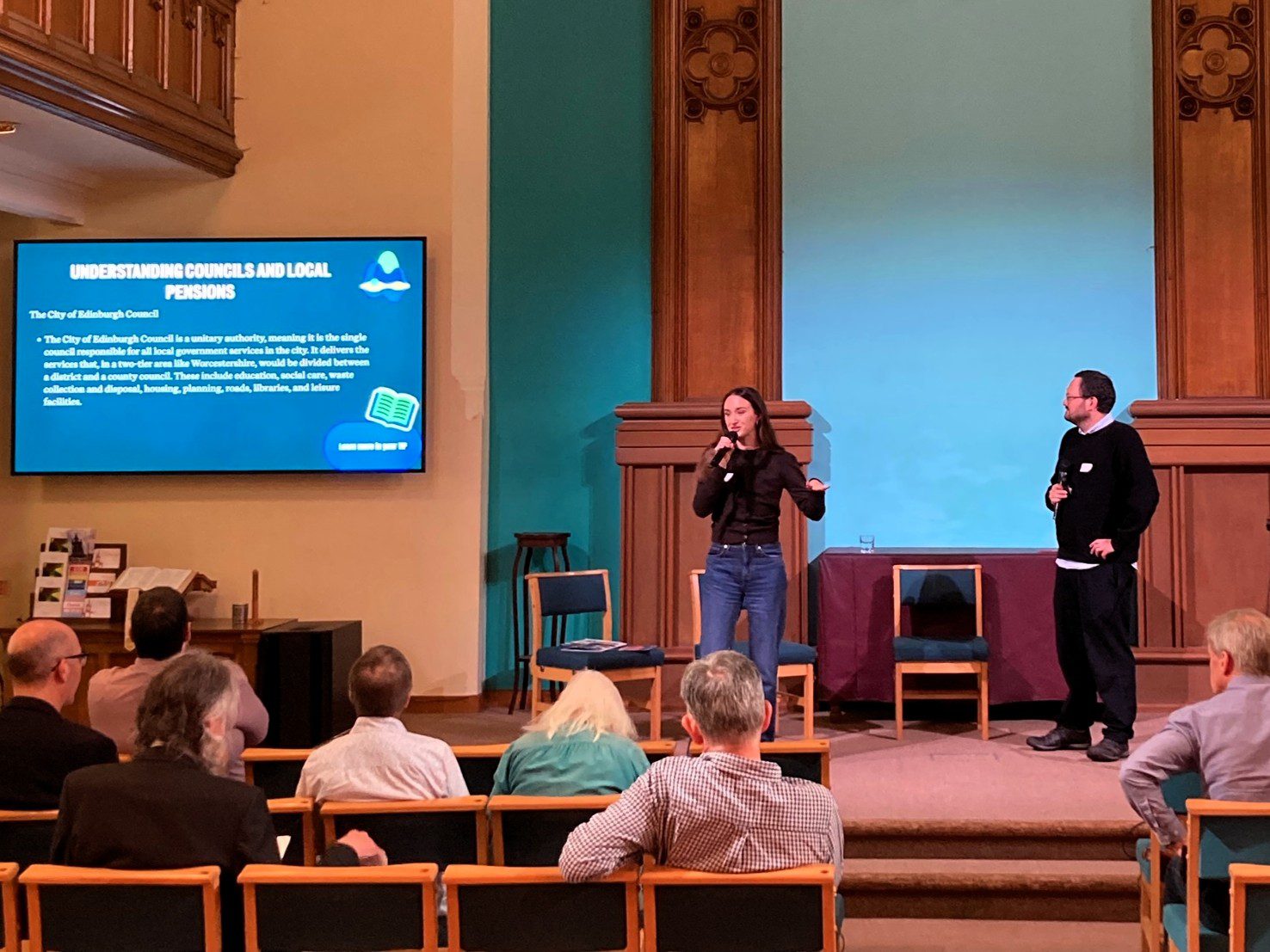
After a break for networking and refreshments, Ruby Hornsby and Matthew Sellar from Hope for the Future presented an interactive workshop on their methods of engaging with local politicians on a range of issues including pension funds and ethical investment. They gave some practical suggestions regarding building relationships with these representatives using areas of common concerns and stressed the importance of using Specific, Measurable, Achievable, Relevant and Time-bound (SMART) asks to increase the chances of positive outcomes from our approaches to politicians.
Jenny Adams summed up some key messages from the event and Sharon Hall presented some suggested next steps including approaching investment managers, starting the Green Investment Declaration journey and picking up some of the SMART asks for local politicians. The very engaged audience continued enthusiastic discussions over a vegetarian lunch and fed back very positively about the event. One supporter commented on social media that it was ‘one of the best meetings I have attended in numerous years. Thank you for an excellent event’. We were very pleased with the interest shown in these important topics and look forward to future conversations and progress in Green investment from more church investors.