
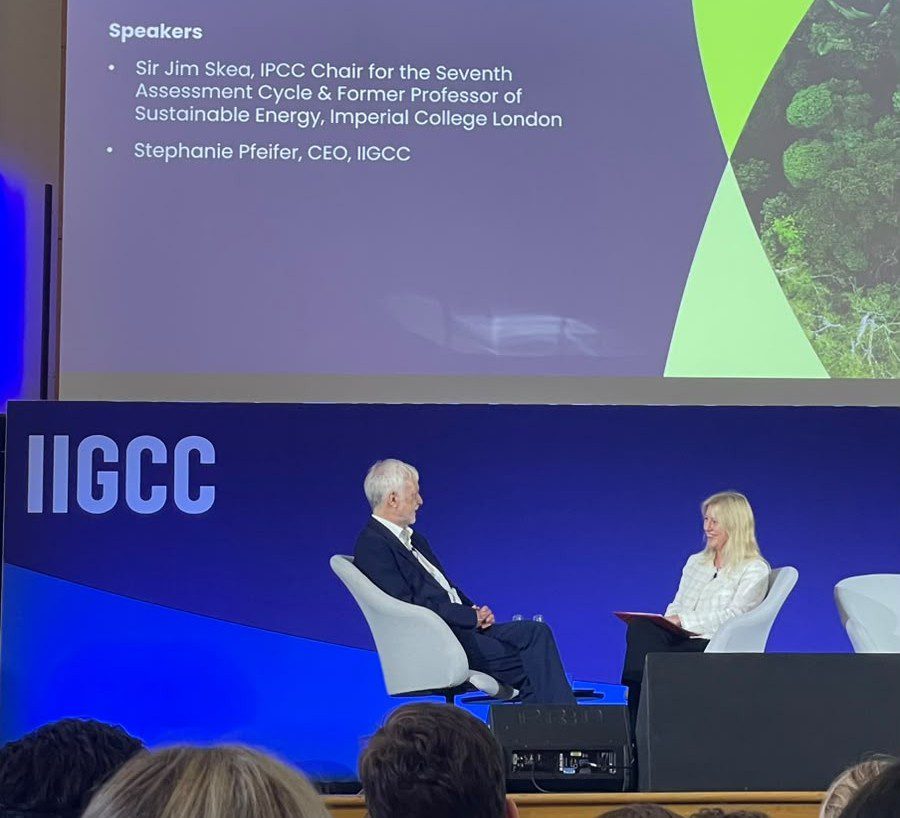
Operation Noah Campaign Officer, Bokani Tshidzu, shares her takeaways from the IIGCC summit.
For me, London Climate Week started with attending the Institutional Investors Group on Climate Change (IIGCC) Summit, celebrating their 25th anniversary of encouraging investor action on climate breakdown. While focusing primarily on large institutional investors, the event’s messages around climate-positive investment are just as relevant for smaller church asset owners. For Churches investing to support apostolic works and care for communities, integrating climate mitigation and adaptation into their strategies is a key part of faithful, responsible stewardship.
My three key takeaways from the afternoon are:
- Bringing adaptation and mitigation together for greater success: A major theme of the summit was that climate mitigation (like cutting emissions) and adaptation (resilience against climate impacts) should not be treated as separate silos. Considering them together makes climate solutions far more likely to meet with success. For church communities it may be helpful to look at the co-benefits: installing renewable energy solutions on our own land or properties both cuts long term energy costs and emissions and can boost local energy security and improves community health by reducing local pollution. Although land use and nature-based solutions present more complex, less obvious investment pathways, they remain a severely underestimated area where investors can direct capital to bolster climate resilience. When we view these sides of the climate puzzle together, the holistic benefits multiply.
- Speaking truth to power for a clearer investment landscape: Another clear call from the summit was that investors urgently need a stable, clear policy direction from the government to create predictable markets for long-term investing. At Operation Noah, we’ve always recognised that the role of the Church includes speaking truth to power. Through our collaborations with organisations like The Climate Coalition and Hope for the Future, we are helping church leaders use their unique moral voice to influence policy and engage directly with MPs. Our regional Green Investment Roadshows are also a good way to bring people together at a local level to encourage collaboration in practical, regional solutions.
- The rising cost of doing nothing and the danger of ‘procrastination’: We can no longer treat climate change as a distant threat; it is an active inflationary risk, and doing nothing is becoming punitive. The summit outlined a clear spectrum of corporate readiness, warning against ‘procrastinating’ companies that haven’t even started adaptation planning. For smaller investors using pooled funds, it may be helpful to engage with fund managers to avoid these high-risk businesses. If a fund remains exposed to companies that ignore these looming ecological tipping points, there is a risk of being left with severely mispriced, stranded assets that face rapid value deterioration.
As faith-based investors, our capital must reflect our theology. By demanding clearer visibility over how physical risks to assets are evaluated, smaller portfolios can collectively signal that there is no room left for climate procrastination.
To this end, Operation Noah has produced a template letter church asset owners can send to their investment managers to develop climate products that meet the urgent needs.
Please note: These are purely personal takeaways from the summit and do not constitute investment advice.