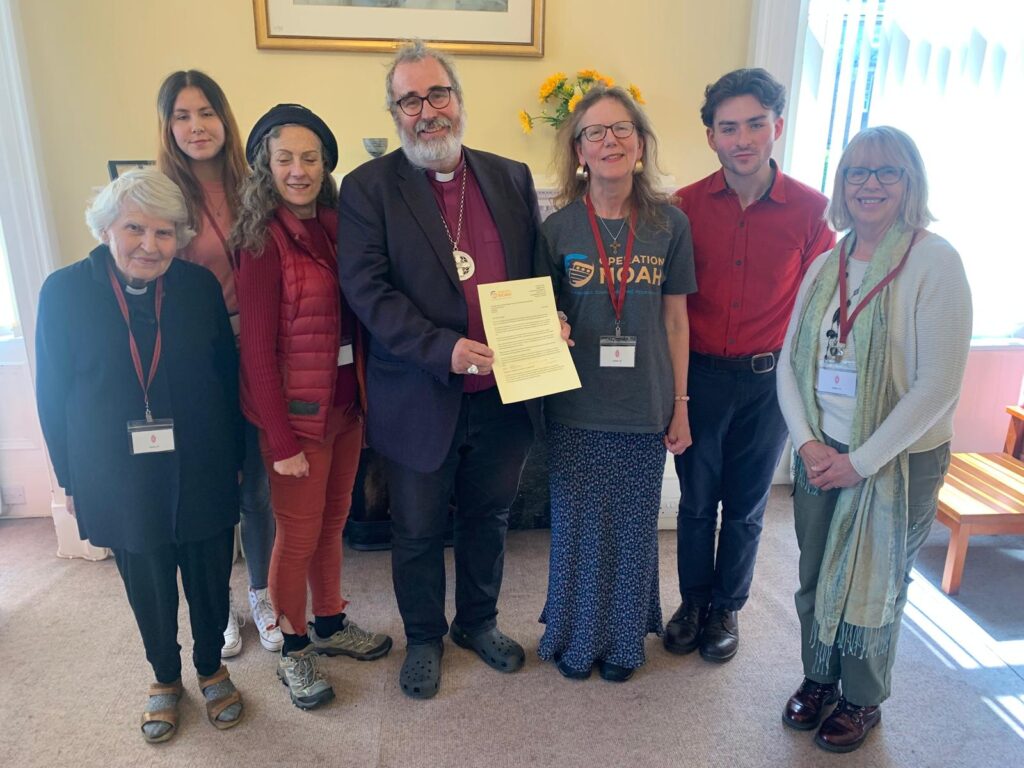
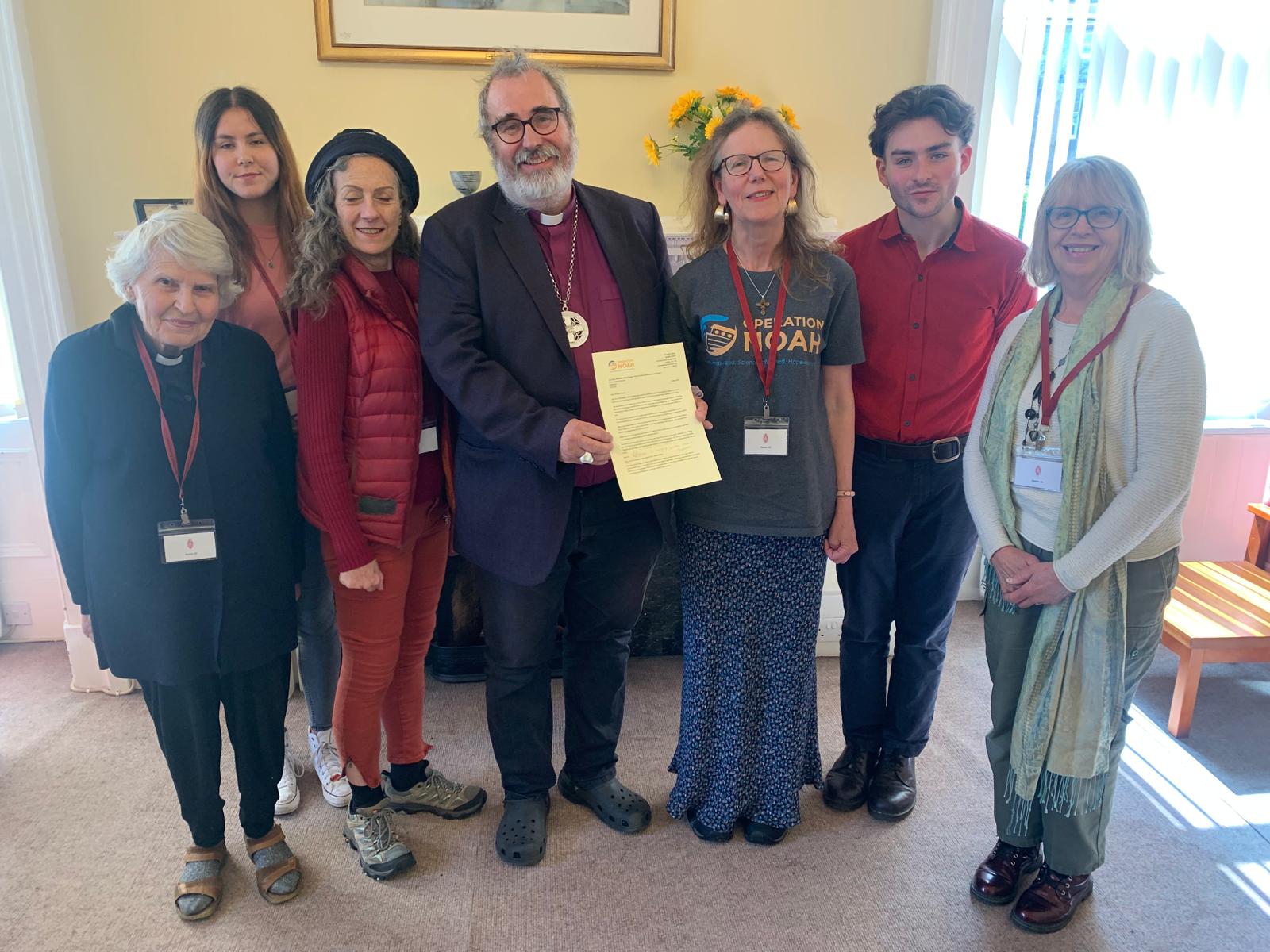
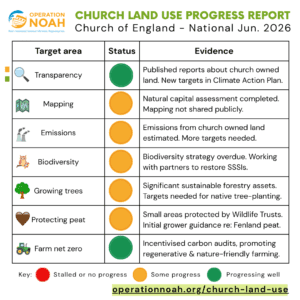
 The Church of England holds land which is nationally managed by the Church Commissioners. We gave a detailed report of their progress from 2022 to 2025 in our previous blog: Celebrating Changes in Church of England Land Use – Operation Noah.
We recognise significant changes since the publication of our 2022 report. However, we are keen to see more progress. There are opportunities at the upcoming General Synod in July to address emissions from church land by including this in net zero targets. We would also like to see stronger aims to restore biodiversity including setting ambitious area-based targets for contributing to the UK Government’s 30by30 commitment – and this will be addressed in a Private Members’ Motion.
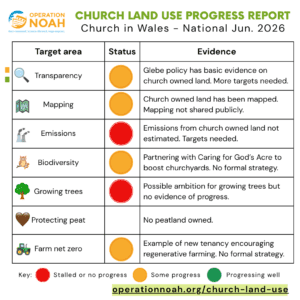 The Church in Wales owns a lot less land than the Church of England, and correspondingly has much lower staff resources to address how it is being managed. We have seen some progress in the Church’s partnering with Caring For God’s Acre to boost biodiversity in churchyards, and one recent tenancy change allowed the selection of a new tenant with aims to farm regeneratively.
There are plans to review the landholdings more thoroughly but we understand this may be with a view to selling some glebe land.
We were glad to be invited to an Eco Church Wales event which showcased some local good practice.
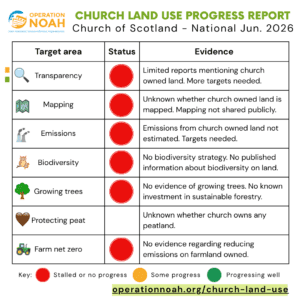 We have had good conversations with the Faith and Public Life team at Church of Scotland and were pleased to be invited to deliver a webinar as part of their Faith Action Programme. Church Land in the Church of Scotland is managed by the General Trustees and we have not received formal responses from them.
We are pleased to hear that a new post of Net Zero Implementation Director in the Office of the Assembly Trustees is anticipated to be filled in the near future. We understand that this person will have something more of a remit for church land and we are looking forward to working with them.
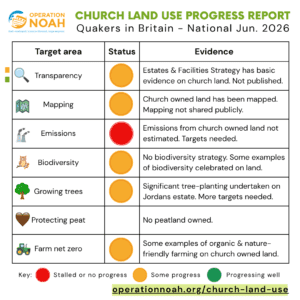 We took longer to catch up with the Quakers in Britain due to some personnel changes, but we have heard some positive examples from their sustainability strategy and information about their landholdings available online.
They own a small amount of land nationally but there are some encouraging things taking place, including a determined effort to plant trees even though the hot weather over recent years has made this rather more difficult.
We are hoping that they will share more of a case study around their tree-planting in due course, which will be helpful for other churches and groups wanting to plant trees.
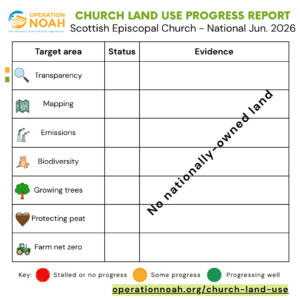
The Scottish Episcopal Church does not own any land nationally. We have had positive conversations with them including their active Net Zero Team and we were pleased to offer a webinar as part of their net zero programme which is available to view online.
There are some positive stories of local church land use shared on their Net Zero Action website.
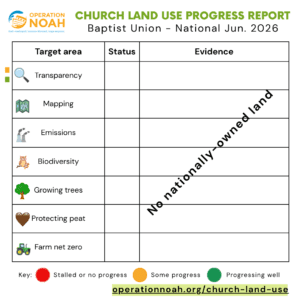
The Baptist Union does not own any land nationally. They have been in a fallow year without a president, welcoming a new president Alex Afriyie in mid May 2026.
The Baptist Union Environmental Network shares a range of resources and video stories on their website.
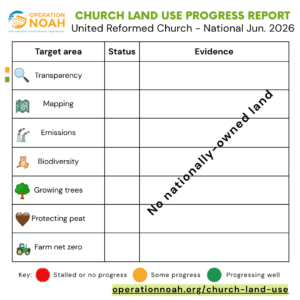
The United Reformed Church does not own any land nationally that isn’t attached to a building (manse, meeting house, offices). We led a positive webinar with their Green Apostles group and have been pleased to hear of further conversations taking place with Synod property officers. There is an aim to talk with each other to share ideas and information and to coordinate on some of their wider net zero work as they develop their Environmental Policy into a strategic plan. They have a range of resources on their website.
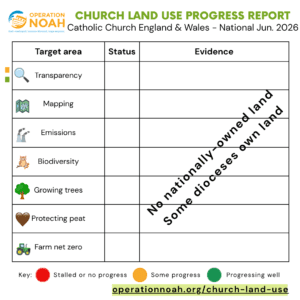
The Catholic Church in England & Wales does not own any land nationally, although we know that some dioceses do own land. The Diocese of Salford has shared a range of resources linked to their Guardians of Creation project.
We have also had a positive conversation with the Ecological Conversion Group who are supporting the network of Diocese Environmental Leads.
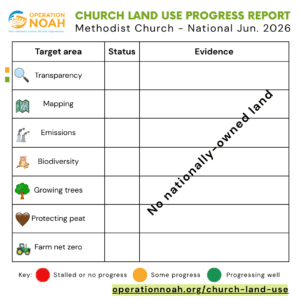
The Methodist Church does not own any land nationally. We have had positive meetings with their Director for Social Justice and Social Action and their Director of Environmental Engagement. They have a range of resources and stories on their website.